
Supporting Initiatives
Learning Networks in Higher Education and Digital Spaces
This research strand explores how learning networks, digital platforms, and professional relationships shape leadership, teacher preparation, and student development in higher education and beyond. Projects in this area examine online and offline professional networks, the evolving role of social media in leadership practice, and how peer connections support teacher and student learning. This work investigates how relationships influence instructional growth, digital engagement, and industry-relevant skills in education and professional learning ecosystems.
This project examines how educational leaders engage across offline and online networks to exchange knowledge, resources, and professional support. This initiative highlights the role of social media and digital platforms in leadership practice, revealing how school leaders navigate professional relationships in both physical and virtual spaces.
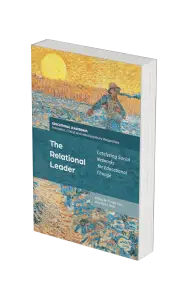
- Martin Rehm, Alan Daly, Peter Bjorklund, Yi-Hwa Liou, and Miguel del Frenso (2023). Bridging the Divide – How Principals Can Broker Information and Resources between Off- & Online Spaces. In Y.-H. Liou & A. J. Daly (Eds), The relational leader: Catalyzing networks for educational change (pp. 253–269). Bloomsbury.
- Rehm, M., Daly, A. J., Bjorklund Jr., P., Liou, Y.-H., & Del Fresno, M. (2021). The social continuum of educational leadership: Exploring the offline and online social networks of elementary principals. The Elementary School Journal, 122(1).
- Daly, A. J., Liou, Y.-H., Del Fresno, M., Rehm, M., & Bjorklund Jr., P. (2019). Educational leadership in the Twitterverse: Social media, social networks and the new social continuum. Teachers College Record (Yearbook), 121(140304), 1-20. Vialogues here
This project explores how social connections shape teacher preparation and instructional growth within preservice teacher cohorts. Relationships formed during training play a crucial role in professional learning and development. This initiative investigates how these evolving networks support instructional practices and help preservice teachers navigate the realities of the profession.
- Liou, Y.-H., Daly, A. J., Downey, C., Bokhove, C., Civís, M., Díaz-Gibson, J., & López, S. (2020). Efficacy, explore, and exchange: Studies on social side of teacher education from England, Spain, and US. International Journal of Educational Research, 99(2020 August), 101518.
- Liou, Y.-H., & Daly, A. J. (2018). Evolving relationships of pre-service teachers: A cohort-based model for growing instructional practice through networks. In S. A. Yoon & K. J. Baker-Doyle (Eds.) Networked by design: Interventions for teachers to develop social capital (Chapter 5, pp. 85-110). New York, NY: Routledge Press.
- Liou, Y.-H., Daly, A. J., Canrinus, E. T., Forbes, C. A., Moolenaar, N. M., Cornelissen, F., Van Lare, M., & Hsiao, J. (2017). Mapping the social side of pre-service teachers: Connecting closeness, trust, and efficacy with performance. Teachers and Teaching: Theory and Practice, 23(6), 635-657.
This project equips university students with Fintech skills through an integrated learning design that connects them with industry partners. Hands-on experiences help build technical expertise and confidence, while peer networks create opportunities for support, knowledge exchange, and collaboration. These connections strengthen students’ ability to navigate real-world Fintech challenges and develop the competencies needed for the industry.
- Chiang Lin, T.-J., Lee, Y.-S., Chiang, K.-H., & Liou, Y.-H. (2025). Enhancing college students’ self-efficacy in fintech education through a comprehensive learning strategy: A quasi-experimental study. 2025 13th International Conference on Information and Education Technology (pp. 133–137). ISBN: 979-8-3315-3784-5.