
Core Initiatives
NPLS
Networked Professional Learning Schools
Understanding Social Network Structure in Professional Learning Schools:
A Longitudinal Comparative Analysis of Knowledge Use and Diffusion in Support of Professional Practice and Performance
Highlights
This research focuses on
- How the social and relational aspects of professional learning communities shape knowledge-sharing and collaboration.
- How educators engage in knowledge exchange to support instructional decision-making and collective growth.
- The structural, relational, and cognitive conditions that sustain professional learning networks over time.
The NPLS Project explores the social and relational aspects of professional learning communities, recognizing them as essential infrastructures for knowledge exchange, collaboration, and professional growth in schools. Professional learning does not happen in isolation—it is embedded in everyday interactions among educators. NPLS looks at how teachers and school leaders build professional connections, share knowledge, and engage in collective learning that shapes instructional practices and strengthens school-wide learning cultures.
As an early foundational study informing NetLead Lab, NPLS focuses on how educators sustain professional ties, access research-based knowledge, and participate in learning networks that shape their professional practice. The project examines how knowledge flows within and across PLCs, helping to uncover the patterns of collaboration, trust, and shared expertise that make learning communities thrive. These insights help schools and education leaders understand how networked professional learning structures evolve over time and how they can support leadership practices, instructional capacity, and school-wide learning cultures.
NPLS contributes to NetLead Lab’s broader mission by offering practical insights into how schools can foster professional networks that strengthen collaboration, knowledge-sharing, and system-wide learning.
Further Reading
- Díaz-Gibson, J., Liou, Y.-H., & Daly, A. J. (2025). Guest editorial: Leading schools towards ecosystems for learning and flourishing. Journal of Professional Capital and Community, 10(2), 95–97.
- Liou, Y.-H. (2025). Leadership dynamics in educational ecosystems: Examining social influence networks in school reform. Journal of Professional Capital and Community, 10(2), 98–118.
- 黃裕元、劉怡華(2025)。TIMSS主題研究趨勢與知識圖譜:2004–2024年文獻計量分析。台灣教育研究期刊6.5期刊登(預計今年9月1日出刊)Huang, Y.-Y., & Liou, Y.-H. (). Mapping two decades of TIMSS research (2004–2024): Trends, networks, and evolving themes. Journal of Taiwan Education Studies.
- Liou, Y.-H. (2025). Configuring teacher leadership in school-wide reform: A social network approach. In P. Liu & L. M. Thien (Eds.), Understanding teacher leadership: An international perspective (pp. 111–136). Routledge.
- 劉怡華、蘇玲慧(2024)。課程改革中的社會網絡:108課綱實施中學校課發會角色之混合方法個案研究。台灣教育研究期刊,5(5),167–197。(2024年9月1日出刊)
- Liou, Y.-H., & Su, L.-H. (2024). Networks for change: The role of curriculum development committees in education reform – A mixed-methods social network case study. Journal of Taiwan Education Studies.
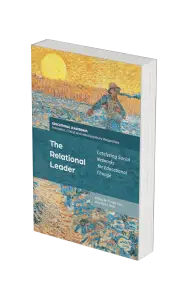
- Liou, Y.-H., & Daly, A. J. (2023). The relational leader: Mapping the landscape of leadership and change through social networks. In Y.-H. Liou & A. J. Daly (Eds), The relational leader: Catalyzing networks for educational change (pp. 1–15). Bloomsbury.
- Liou, Y.-H., & Daly, A. J. 2023). Where are we headed? A Relationally Focused Agenda for Research and Practice in Leadership. In Y.-H. Liou & A. J. Daly (Eds), The relational leader: Catalyzing networks for educational change (pp. 280–298). Bloomsbury.
- Liou, Y.-H., & Daly, A. J. (2023). Networked systems leadership: The potential of social network theory and analysis. In Robert Tierney, Fazal Rizvi, & Kadriye Ercikan (Eds), International Encyclopedia of Education (4th Ed) (pp. 524–535). Elsevier.
- Liou, Y.-H., & Bjorklund Jr., P. (2023). Understanding teacher network formation amidst reform: A mixed-methods study on collaborative structure, network intentionality, closeness, and school climates. Teaching and Teacher Education, 134, 104296.
- 劉怡華(2021)。領導與學習的人際樣貌:以混合研究社會網絡分析法探索十二年國教變革脈絡下之校長學習。教育研究月刊,322,63–99。
- Liou, Y.-H. (2021). The social landscape of leadership and learning: A mixed methods social network approach to principal learning in times of reform. Journal of Education Research, 322-323, 63-81 (113-129). DOI: 10.3966/168063602021020322005
- Liou, Y.-H. (March 29, 2021). Learning ecosystems: Knowing when you are ready for change. Learning Ecosystem and Leadership. WISE Qatar Foundation.
- Liou, Y.-H., & Canrinus, E. T. (2020). A capital framework for professional learning and practice. International Journal of Educational Research. 100(2020 August), 101527.
- Liou, Y.-H., Moolenaar, N. M., & Daly, A. J. (2016). Developing and assessing educator beliefs about the Common Core. Educational Assessment, Evaluation and Accountability, 28(4), 377–404.
- Liou, Y.-H., Daly, A. J., Brown, C., & Del Fresno, M. (2015). Foregrounding the role of relationships in reform: A social network perspective on leadership and change. International Journal of Educational Management, 29(7), 819-837.
- Liou, Y.-H., & Daly, A. J. (2014). Closer to learning: Social networks, trust, and professional communities. Journal of School Leadership, 24(4), 753-795.
- Liou, Y.-H., Grigg, J., & Halverson, R. (2014). Leadership and the design of data-driven professional networks in schools. International Journal of Educational Leadership and Management, 2(1), 29-71.